



























Economics explains choices under scarcity
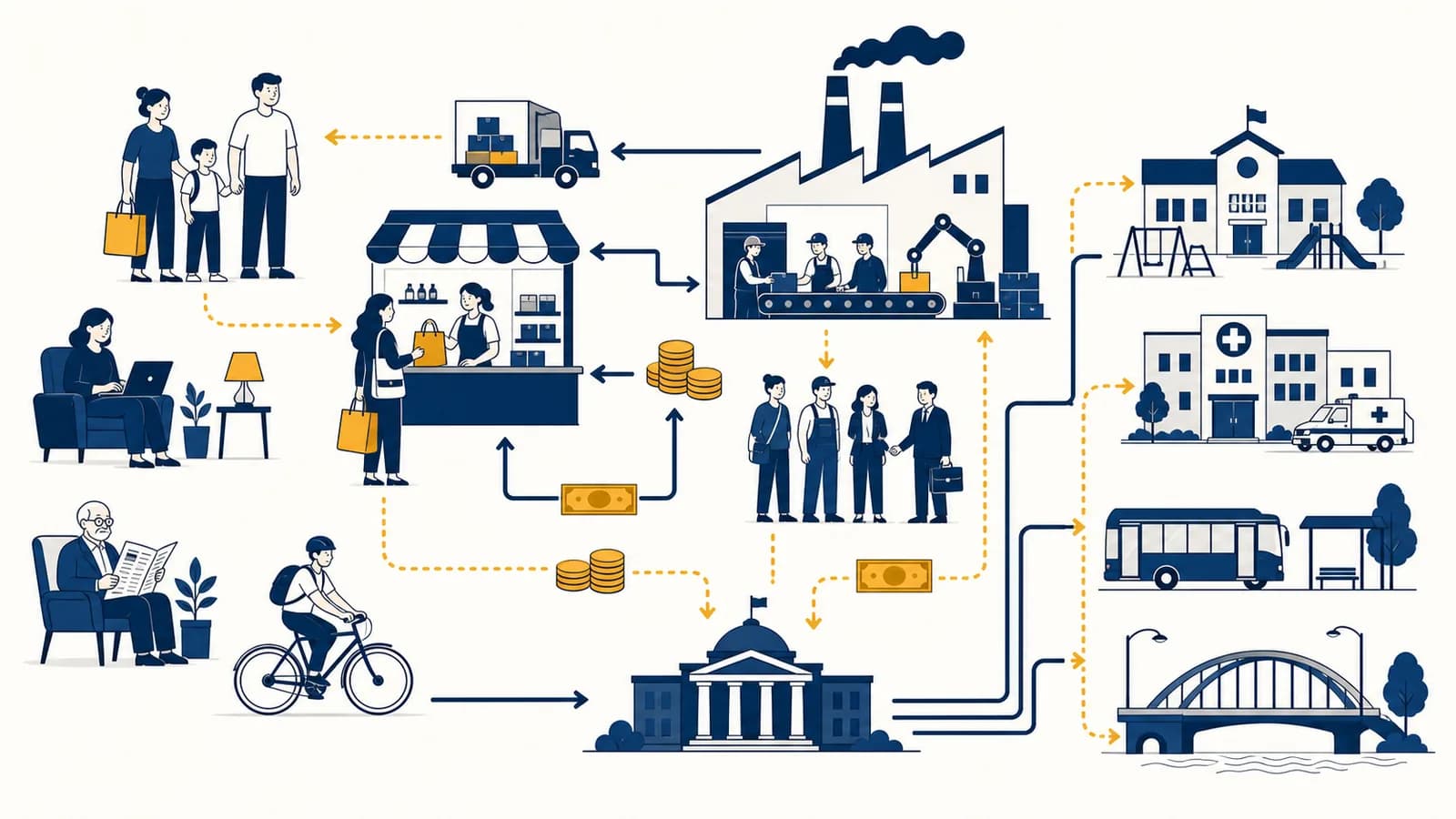
Economics is the study of choices that allocate scarce resources, in the context of households, firms, governments, and whole societies. It answers questions about what gets produced, who receives income, why prices change, why jobs disappear, how policy affects behavior, and why growth raises living standards unevenly.
Scarcity does not mean that everything is rare or that everyone is poor. It means that time, labor, land, machinery, skills, and natural resources have alternative uses. A hospital can spend its next million dollars on more nurses, a scanner, or community clinics, but it cannot spend the same money three times. Every choice closes off another possibility.
Scarcity creates opportunity cost. The true economic cost of a choice is the best alternative given up, not simply the money paid.
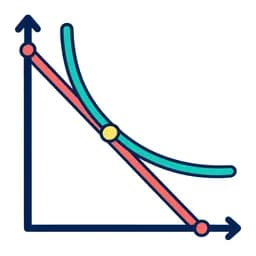
This idea turns a vague trade-off into something that can be examined. If a student works a paid shift instead of revising, the cost includes the lost revision time. If a city builds a car park on vacant land, the cost includes the housing, park, or shops that could have occupied it. The topic of valuing the next best alternative gives this reasoning a precise form.
Economists study incentives because choices respond to rewards, penalties, rules, expectations, and information. A higher wage may attract more applicants. A tax on waste may make recycling more attractive. A deadline may speed up work but reduce care. An incentive changes the costs or benefits facing a decision-maker; it does not guarantee a particular response.
The field uses models to isolate mechanisms. A model is a simplified account of part of the economy, much as a map leaves out most features of a city. Its assumptions make reasoning possible, but they also set limits. Good economic work states those assumptions, compares predictions with evidence, and changes the model when important facts do not fit.
How do individual choices become market outcomes?
Microeconomics explains how consumers, workers, and firms make decisions, then shows how their separate choices interact through markets and institutions. Prices carry information about scarcity, but market rules, bargaining power, income, and expectations help determine who can act on that information.
A consumer chooses among goods subject to a budget. A firm chooses what to produce and which combination of workers, materials, and machines to use. Neither side chooses in isolation. The price one side will accept depends on the alternatives available and on what it expects other people to do.
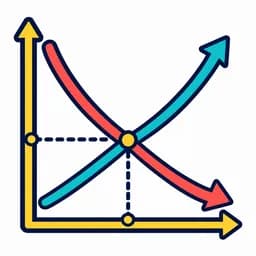
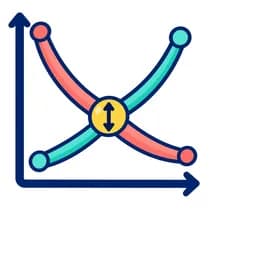
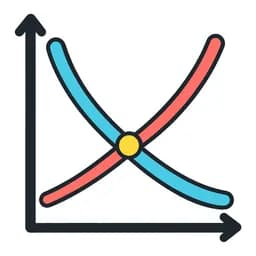
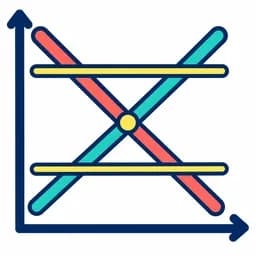
Demand describes how much buyers are willing and able to purchase at different prices, holding relevant conditions fixed. Supply describes how much sellers are willing and able to offer. The mechanism behind buyers and sellers responding to price is central because it links millions of private plans without assuming that anyone directs the whole process.
An equilibrium is a situation in which the quantity buyers plan to buy equals the quantity sellers plan to sell at the prevailing price. It is not automatically fair, permanent, or socially best. It simply means there is no shortage or surplus pushing that market price to change under the model's assumptions.
Responsiveness matters as much as direction. A price rise usually reduces quantity demanded, but the size of that response depends on substitutes, time, necessity, and the share of income involved. Measuring how strongly quantity reacts to price helps explain why the same tax or shortage can produce very different results in different markets.
How do economists compare one more unit?
Economists often make decisions at the margin, comparing the added benefit of one more unit with its added cost. This method explains choices more accurately than comparing total benefits with total costs, because many real decisions concern adjustment rather than starting from zero.
A bakery deciding whether to stay open for one extra hour should compare the extra sales with the extra wages, electricity, ingredients, and wear caused by that hour. The money already spent on ovens is a sunk cost for this decision. It cannot be recovered by closing early, so it should not determine the answer.
If an extra delivery earns $18 and adds $13 in fuel and labor costs, its net marginal benefit is $5.
Consumers also make marginal comparisons. The first glass of water after exercise may bring a large benefit; the fourth usually brings less. This pattern is called diminishing marginal utility. Firms can face diminishing marginal returns when adding more of one input to fixed space or equipment. The concepts are related, but one concerns added satisfaction while the other concerns added production.
Marginal reasoning does not require people to calculate every choice on paper. It is a way to describe the trade-offs implicit in behavior and to test what would happen if conditions changed. If the cost of an extra unit rises, fewer units will normally pass the test. If its benefit rises, more may do so.
A college has already paid to heat its library until 8 p.m. Extending opening until 9 p.m. should be judged by the added staffing, security, and energy costs compared with the added value to users. The full daily heating bill is not the cost of the extra hour.
Cost-benefit analysis extends this logic to projects and policies. It tries to identify all material gains and losses, decide whose gains and losses count, place comparable values on them where possible, and account for timing and uncertainty. Some effects, such as pain, biodiversity, or dignity, resist reliable pricing. Honest analysis reports those limits instead of pretending that a spreadsheet has settled an ethical question.
Markets coordinate activity, but they do not guarantee good results
A market can coordinate dispersed information and voluntary exchange, yet still produce waste, exclusion, or excessive power. The result depends on property rights, competition, information, enforceable contracts, and the effects a transaction has on people who did not choose it.
Competition can push firms to lower costs, improve products, and respond to customers. It is strongest when buyers can compare offers and switch, new sellers can enter, and no participant controls a large share of supply. Actual markets range from street stalls with many sellers to infrastructure networks with large fixed costs and few feasible competitors.
Market power lets a seller raise price or restrict output without immediately losing all customers. Product differences, patents, control of a key input, network effects, and entry barriers can create it. The analysis of dominant firms and strategic rivals asks how prices, output, innovation, and regulation change when competition is limited.
If a trade is voluntary, its effects concern only the buyer and seller.
Production or consumption can affect bystanders through pollution, noise, congestion, disease risk, knowledge, or neighborhood conditions.
Those spillover effects are externalities. A factory may not pay nearby residents for dirty air, so the market price of its product omits part of the social cost. A vaccinated person may reduce infection risk for others, so the private benefit omits part of the social benefit. Costs and benefits that fall on bystanders explain why private choices can produce too much of one activity and too little of another.
Public goods create another problem. If people cannot easily be excluded and one person's use does not substantially reduce another's, each person has an incentive to let others pay. National defense is a standard example. Markets may also fail because one side knows more than the other, contracts are incomplete, or common resources are overused.
Government action can improve an outcome through taxes, subsidies, standards, public provision, competition policy, or clearer rights. It can also misfire because officials lack information, agencies respond to political incentives, and rules create unintended behavior. Economic analysis compares realistic institutions, including their failures, rather than comparing an imperfect market with a perfect government.
Macroeconomics tracks output, prices, and jobs together
Macroeconomics studies economy-wide patterns: total production, income, employment, inflation, borrowing, and growth. These variables move together because one person's spending becomes another person's income, financial conditions affect investment, and expectations can amplify both expansions and contractions.
Gross domestic product measures the market value of final goods and services produced within a country during a period. Counting final output avoids counting the same value repeatedly as materials pass through production. Economists can calculate GDP through production, spending, or income because each completed transaction has a product, a buyer's expenditure, and a seller's income.
Consumption of 60, investment of 20, government purchases of 25, exports of 10, and imports of 15 give GDP of 100.
The measurement of domestic production and income is useful for tracking recessions and long-run growth, but it is not a complete score of welfare. Unpaid care, leisure, environmental damage, health, security, and the distribution of income can change without being represented well by the total.
Inflation is a sustained rise in the general price level, not a single product becoming dearer. It reduces what a unit of money can buy. Causes can include demand growing faster than productive capacity, rising input costs, supply disruption, and expectations that feed into wages and prices. The effects depend on which prices and incomes adjust, and how quickly.
The study of changes in the purchasing power of money distinguishes the price level from the inflation rate. If an index rises from 100 to 105, the inflation rate is 5 percent for that interval. If it then rises to 108, prices are still rising, but the inflation rate has fallen to about 2.9 percent because .
Unemployment counts people without work who are available for work and actively seeking it, under the chosen statistical definition. The headline rate can miss underemployment, discouraged workers, insecure hours, and differences between regions or groups. Economists distinguish temporary job search, mismatch between skills and vacancies, and job losses caused by weak total demand.
How can policy steady an unstable economy?
Governments and central banks can influence total demand, credit, and expectations, but they operate with delays and incomplete information. Stabilization policy aims to limit deep recessions and persistent inflation while preserving productive capacity, financial stability, and confidence in the rules.
Fiscal policy changes government spending, taxation, and transfers. During a downturn, extra public spending or lower taxes can support demand when households and firms cut back. During high inflation, tighter budgets can reduce demand. The effect depends on timing, spare capacity, financing, how recipients respond, and what the government buys.
A tax cut may leave households with more money, while a construction program directly purchases labor and materials.
Some of the extra income is spent, giving firms a reason to raise output if they have unused capacity.
New income reaches workers and suppliers, but saving, taxes, imports, bottlenecks, and price increases reduce or redirect the chain.
This transmission explains why the size of a budget change is not necessarily the size of its final effect. The topic of taxing and spending to influence total demand examines multipliers, automatic stabilizers, deficits, and the constraints created by public debt.
Monetary policy is usually conducted by a central bank. It influences short-term interest rates and financial conditions, which can affect borrowing, saving, asset prices, exchange rates, and expectations. A lower policy rate may encourage interest-sensitive spending, but weak banks, heavy debt, or pessimism can blunt the response.
The mechanisms of central bank action on money and credit matter because announcements do not reach shops and factories instantly. Banks must alter lending terms, borrowers must react, and firms must decide that demand justifies investment. Long and variable delays make both overreaction and underreaction possible.
Fiscal and monetary policy can reinforce or offset each other. They also have distributional effects. Changes in tax, public services, interest payments, employment, and asset prices create winners and losers even if total output improves. Policy assessment therefore needs more than a forecast of one national average.
Trade rearranges production across borders
International economics explains why countries exchange goods, services, assets, and currencies, and how those exchanges redistribute opportunities. Trade can raise total output through specialization, yet its benefits and adjustment costs do not automatically reach the same workers, firms, regions, or households.
Comparative advantage is the key production idea. A country can gain from trade even if it is more productive in every activity, provided its relative costs differ. What matters is the opportunity cost of producing one good instead of another, not simply who uses fewer hours for each good.
In this constructed example, Country A has the lower opportunity cost in tables because it gives up two shirts rather than five. Country B has the corresponding comparative advantage in shirts. If they specialize partly and trade at an exchange rate between those opportunity costs, both can consume beyond what their separate production possibilities allowed. Relative costs as the basis for specialization shows the arithmetic in full.
Real trade is more complicated. Transport costs, quality, scale economies, supply security, environmental rules, labor standards, and changing technology all affect the result. Workers and capital cannot always move quickly into expanding industries. A cheaper imported product may help many consumers while imposing a concentrated loss on one town.
Tariffs raise the domestic price of imported goods by adding a tax at the border. They may protect selected producers or pursue strategic goals, but consumers and firms using imported inputs bear costs. Trading partners can retaliate. A sound assessment identifies the objective, traces incidence, and compares the tariff with more direct policies.
Exchange rates connect national prices. If a currency depreciates, domestic goods may become cheaper to foreign buyers while imported goods become dearer at home. The final effect depends on contracts, responsiveness, inflation, capital flows, and central bank policy. Currency movements therefore change both competitiveness and purchasing power.
Growth depends on productivity, institutions, and distribution
Long-run living standards rise mainly when people can produce more valuable output per hour, but development involves more than output growth. Health, education, security, infrastructure, institutions, environmental limits, and the distribution of resources shape what higher production means for actual lives.
Productivity can increase through better tools, skills, organization, infrastructure, research, and the movement of resources toward more effective uses. It is not the same as making employees work faster. A redesigned process that prevents errors can raise output while reducing strain. Education can improve productivity, but only if people can use their knowledge in suitable jobs.
Investment builds productive capacity but requires resources now for benefits later. Financial systems connect savers with households, firms, and governments that want funds. They can spread risk and direct capital toward promising projects. They can also magnify instability when debt is opaque, incentives reward reckless lending, or asset prices become detached from expected income.
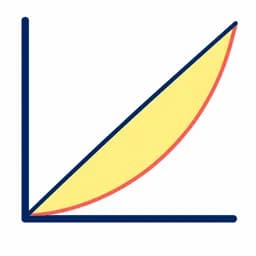
Average income hides distribution. Two economies can have the same output per person while one has broad access to housing, health care, and education and the other concentrates gains among a small group. The study of how income and wealth are divided examines wages, ownership, taxes, transfers, inheritance, and unequal access to opportunities.
Poverty can mean an inability to secure basic needs, or living far below the customary standard of one's society. Development policy must identify the constraint rather than assume that one remedy fits every place. Credit may help a viable business but cannot replace a missing road, a stable electricity supply, effective public health, or legal protection.
Economics is commonly mistaken for a doctrine
Economics does not prove that markets are always right, that people care only about money, or that efficiency settles moral questions. It supplies models and evidence for tracing choices and consequences; conclusions still depend on facts, assumptions, institutions, and stated social values.
The textbook figure called homo economicus is a modeling device, not a full description of a person. People use shortcuts, care about fairness, follow social norms, make inconsistent choices, and frame the same option differently depending on its presentation. Evidence about predictable departures from simple rational choice helps build models that fit observed decisions more closely.
Asks what is happening and predicts consequences, such as how a rent ceiling may affect the quantity of housing supplied.
Asks what should happen, which requires values such as fairness, freedom, security, or priority for people with low incomes.
The two kinds of reasoning interact but should not be disguised as each other. Evidence can reveal that a proposal fails its stated goal or burdens a particular group. Evidence cannot decide, by itself, how society should weigh liberty against equality or present consumption against future environmental risk.
Another mistake is to treat a forecast as a promise. Economies are open systems whose participants react to news and policy. Data arrive late and are revised. Relationships can change after a financial crisis, a technological shift, or a new rule. Economists therefore use ranges, scenarios, sensitivity tests, and competing models when uncertainty is material.
Efficiency is also narrower than goodness. An outcome is allocatively efficient when no reallocation can make someone better off without making someone else worse off, given the resources and preferences in the analysis. That condition can hold even when wealth and power are distributed in ways many people judge unacceptable.
Economics connects choices to mathematics, history, politics, and the environment
Economics shares methods and questions with other subjects because economies are built from human behavior, physical resources, legal rules, and measurable change. Its models become more useful when mathematics, history, government, geography, psychology, and environmental science supply the mechanisms and context they omit.
- Mathematics and statistics express relationships, estimate effects, and show uncertainty. Algebra traces a budget constraint; calculus studies marginal change; probability separates risk from certainty. Statistical identification asks whether an observed relationship is causal or merely correlated.
- History reveals how institutions developed and tests claims against episodes that cannot be recreated in a laboratory. Recessions, industrialization, migration, inflation, and policy reforms make more sense when their sequence and local conditions are known.
- Government and law define property, contracts, corporate powers, labor rights, taxes, welfare systems, and competition rules. A market is never outside institutions; legislation and enforcement determine who may trade, what can be owned, and which harms create liability.
- Geography and environmental science explain location, transport, land use, natural resources, climate risk, and pollution. Economic choices must fit physical limits, while environmental policy must account for incentives and distribution.
- Psychology and sociology explain attention, identity, trust, norms, habits, and group behavior. These factors shape consumption, saving, work, bargaining, and responses to policy.
These connections prevent category errors. A rise in food prices may involve weather, shipping, market concentration, currency movements, household budgets, and government relief. No single subject supplies the complete explanation. Economics contributes a disciplined account of incentives, constraints, trade-offs, and feedback.
Correlation is not enough. If higher education and higher earnings appear together, the difference may reflect education, prior skills, family resources, selection, or several causes at once. Causal claims need a design that separates these possibilities.
Good interdisciplinary work keeps each question visible. Science can estimate how emissions affect temperatures and ecosystems. Economics can compare abatement options and trace their costs. Politics can explain which rules are feasible. Ethics addresses duties to people elsewhere and in future generations. Combining them does not erase their different jobs.
Economics makes trade-offs visible before choices are made
The lasting value of economics is a disciplined habit: identify the scarce resource, specify the alternatives, trace incentives, examine marginal changes, test who bears each cost, and compare the prediction with evidence. This habit improves decisions without pretending that every value has a price.
A useful economic explanation names the decision-maker and the constraint. It asks what changes at the margin, which response is expected, and what evidence could disprove the claim. It then follows effects beyond the first transaction. A wage rule affects workers and employers, but it may also affect prices, hours, hiring standards, automation, profits, and public budgets.
- Define the outcome. “Better” may mean higher output, lower poverty, cleaner air, more security, or a different distribution. Ambiguous goals cannot be assessed clearly.
- Find the counterfactual. Compare the choice with what would probably happen without it, not with an imaginary world in which every problem disappears.
- Trace incidence. The person who sends a tax payment may not bear its full economic burden. Prices, wages, rents, and profits can pass costs to others.
- Include time and uncertainty. A policy can help now and cost later, or impose an immediate cost for a future gain. Predictions should state what is unknown.
- Separate evidence from values. Facts can narrow disagreement, while honest value judgments explain why people may still choose differently.
This framework applies to a household choosing a loan, a business setting capacity, a union bargaining over conditions, or a government designing climate policy. The scale changes, but scarcity and response remain. Economic reasoning is strongest when paired with local knowledge and revised after outcomes arrive.
The takeaway: Economics explains how constrained choices interact, how institutions shape the result, and why every policy must be judged against a real alternative, with its costs, benefits, distribution, and uncertainty made visible.
That does not produce an automatic answer to every public argument. It does produce better questions and exposes hidden assumptions. Once the alternatives and mechanisms are explicit, disagreement becomes easier to locate: people may dispute the evidence, the model, the forecast, or the values used to judge the result.