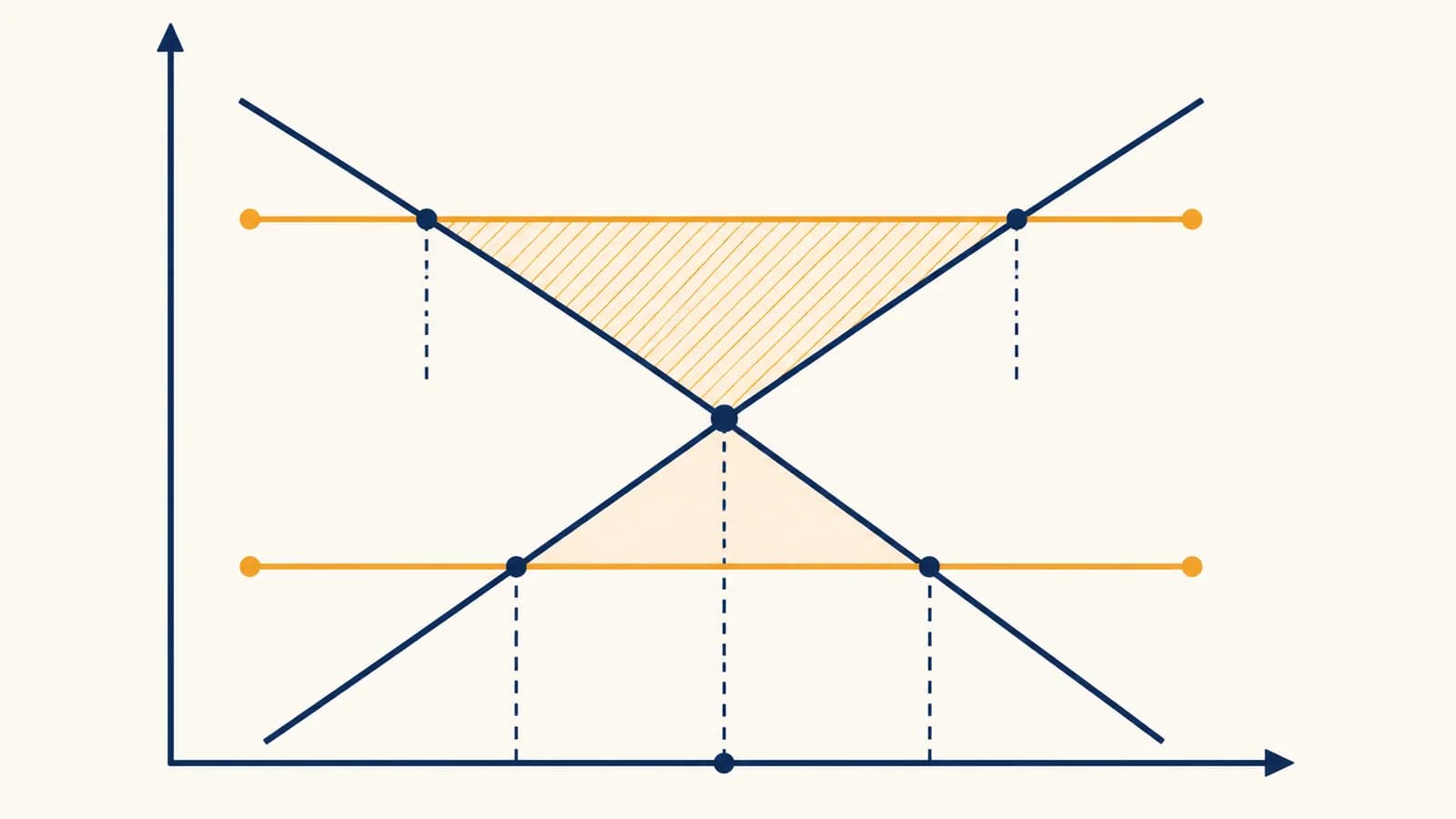
Price controls are legal limits that set the highest or lowest price allowed for a good, service, or resource, in the context of markets and government economic policy. A price ceiling sets a maximum price, while a price floor sets a minimum price. People searching for price controls, rent control, minimum wage, price caps, or price floors are asking the same basic question: what happens when the law blocks a market price from moving freely? These policies exist to protect buyers, support sellers or workers, and keep essential goods within reach, but their effects depend on where the limit is set and how people respond.
What price controls actually are
Price controls are government rules that restrict the prices people may legally charge or pay. A ceiling prevents prices from rising above a stated level, while a floor prevents them from falling below one. Enforcement turns the stated limit into an actual market constraint.
A market price normally changes as buyers and sellers react to scarcity, costs, income, substitutes, and expectations. A control replaces part of that adjustment process with a legal boundary. The law does not erase supply or demand. It changes which transactions are permitted and therefore changes how people compete for goods, jobs, or customers.
A maximum legal price. It matters only when set below the price the market would otherwise reach. Rent caps and emergency limits on certain retail prices are common examples.
A minimum legal price. It matters only when set above the price the market would otherwise reach. Minimum wages and some agricultural support prices are examples.
The unrestricted market price is called the equilibrium price. At that price, the quantity buyers want equals the quantity sellers want. A price control is binding when it rules out that equilibrium price. A control is nonbinding when the market already operates within the legal boundary.
A legal limit can exist without changing the market. A ceiling above equilibrium or a floor below equilibrium is nonbinding, so the same price and quantity can continue.
Suppose loaves of bread sell for $4 in an unrestricted market. A $6 ceiling changes nothing because sellers already charge less. A $3 ceiling binds because the former $4 price is no longer legal. In the same market, a $2 floor changes nothing, while a $5 floor binds. The words ceiling and floor do not tell you the effect by themselves. Their positions relative to equilibrium do.
How a price ceiling works
A binding price ceiling holds the legal price below equilibrium, increasing the quantity buyers demand while reducing the quantity sellers supply. The result is a shortage, so some method other than a higher posted price must decide who receives the available units.
Imagine a town where apartment rents would settle at $1,200 per month. At that price, tenants seek 1,000 apartments and landlords offer 1,000. The town sets a rent ceiling of $900. At the lower price, suppose tenants seek 1,200 apartments, while landlords offer only 850. Those quantities are hypothetical, but the arithmetic is explicit:
Worked example: apartments sought but unavailable.
The ceiling has not caused 1,200 apartments to appear at $900. It has created 1,200 desired rentals and only 850 offered rentals. The actual number rented cannot exceed the smaller quantity. The shortage is a gap between plans, not a pile of missing physical objects.
Sellers may not charge the former market price, even if buyers offer it openly.
The lower money price makes the good attractive to more buyers and encourages existing buyers to seek larger quantities.
Lower revenue can make extra production, maintenance, or entry unprofitable. Some sellers leave or reduce quality.
Queues, waiting lists, lotteries, personal connections, eligibility rules, or illegal side payments decide who gets served.
The final step is easy to miss. Every scarce good needs an allocation rule. If legal prices cannot ration apartments, fuel, or tickets, time and administrative judgment may do the job. A buyer who pays $900 rent but spends months searching has a lower money payment, yet still bears a real cost.
This mechanism follows directly from how supply and demand set market prices. The size of the shortage depends on how strongly buyers and sellers respond. If construction and maintenance barely react in the short run, the immediate supply change may be small. Over years, owners can convert buildings, delay repairs, or choose not to build, so the long-run response can be larger.
How a price floor works
A binding price floor holds the legal price above equilibrium, reducing the quantity buyers demand while increasing the quantity sellers supply. The result is a surplus, and someone must absorb, store, discard, or leave unsold the excess quantity offered.
Consider a crop that would sell for $5 per unit, with 10,000 units bought and sold. A support price of $7 encourages farms to offer 12,000 units, while buyers want only 8,500. The calculated surplus is:
Worked example: units offered beyond the quantity buyers want.
If the government merely declares the $7 floor, sellers cannot force private buyers to purchase all 12,000 units. Only 8,500 may trade. If the government promises to buy the excess, it turns the legal floor into a purchase program and must fund storage, disposal, or another use. The fiscal cost is separate from the market price:
A minimum wage is a price floor for labor. The price is an hourly wage, sellers are workers offering labor, and buyers are employers hiring it. If the minimum lies above the wage that would otherwise prevail for a particular kind of work, employers may seek fewer labor hours while more people seek those jobs. Employers can also adjust benefits, schedules, training, prices, technology, worker standards, or profits.
Labor markets contain different skills, places, contracts, and search costs, so one simple diagram cannot predict the exact employment effect in every case. It does identify the pressure created by a binding floor. The final outcome depends on employer power, worker productivity, customer demand, compliance, and the ease of changing staffing or output.
Price ceilings versus price floors
Price ceilings protect buyers from prices judged too high, while price floors protect sellers or workers from prices judged too low. Binding ceilings tend toward shortages; binding floors tend toward surpluses. Both replace price adjustment with other forms of selection and cost.
| Feature | Binding ceiling | Binding floor |
|---|---|---|
| Legal rule | Price may not exceed the limit | Price may not fall below the limit |
| Position relative to equilibrium | Below equilibrium | Above equilibrium |
| Quantity relationship | Quantity demanded exceeds quantity supplied | Quantity supplied exceeds quantity demanded |
| Typical imbalance | Shortage | Surplus |
| Who competes harder | Buyers compete for limited units | Sellers compete for limited buyers or jobs |
| Possible nonprice response | Queues, favoritism, lower quality | Unsold stock, stricter hiring, public purchase |
The two policies share a deeper structure. A legal price changes incentives at the margin. Buyers and sellers then alter quantities, quality, timing, contract terms, or participation. A rule aimed at one visible number can shift costs into less visible forms.
A city caps parking at $1 per hour in a district where spaces fill early. Drivers circle longer and compete through arrival time. A $1 receipt does not prove parking costs only $1. Fuel, delay, and uncertainty are part of the price drivers experience.
Distribution also matters. A ceiling can transfer money from a seller to the buyer who successfully obtains the item. It gives nothing to the buyer left in the queue. A floor can raise income for sellers who complete a sale, while sellers unable to find buyers may earn less overall. Policy analysis must separate the gain per successful transaction from the number and identity of successful transactions.
How economists measure gains, losses, and transfers
Economists evaluate a price control by tracking changes in consumer surplus, producer surplus, government spending, transaction quality, and trades that no longer occur. A lower price for some buyers can coexist with lost gains from trade and higher search costs for others.
Consumer surplus is the difference between what a buyer was willing to pay and what the buyer actually pays. Producer surplus is the difference between the price received and the minimum amount a seller needed to supply the unit. In a competitive equilibrium, trades occur when the buyer values a unit more than its opportunity cost.
A binding control can block some mutually beneficial trades. Suppose a mechanic can provide a repair for a minimum of $80 and a customer values it at $110. A $70 ceiling makes an open legal transaction impossible, even though the possible gain from trade is:
Worked example: of total possible surplus.
If the repair does not occur, that $30 is a deadweight loss in the simplified example. It is value neither person receives. Yet this does not settle the policy question. A government may accept some efficiency loss to pursue stable housing, higher worker income, food security, or access during an emergency. Those aims still require evidence about who benefits and what alternatives cost.
The right tool is a full comparison of policy costs and benefits, including effects not shown on a price tag. Analysts ask which trades disappear, who gains the transfer, how much administration costs, what happens to quality, and how behavior changes over time.
Economists also ask who would have received the good without the control. Under ordinary pricing, willingness and ability to pay influence allocation. Under a ceiling, persistence, information, connections, or official priority may matter more. A waiting list could deliberately favor residents with medical needs, while an informal queue might favor people with flexible schedules. Efficiency and fairness are different questions, even though each allocation rule affects both.
How price controls show up in housing
Housing price controls usually limit rent or the rate at which rent may rise for covered homes. They can reduce payments and displacement for protected tenants, while also changing maintenance, mobility, conversion, construction, and access for people seeking a home.
Rent regulation is not one uniform policy. A strict rent ceiling can freeze the amount charged. Rent stabilization can allow scheduled increases. Rules can cover old buildings but exempt new construction, attach to a unit or a tenant, permit increases after renovation, or allow removal under stated conditions. Those design details change incentives.
For a tenant who already holds a covered lease, the benefit can be direct: the legal rent is below the amount a landlord could charge in an unrestricted market. The tenant gains housing stability and keeps more income for other uses. For a person entering the city, the same policy can make the search harder if fewer controlled units become available.
A protected tenant pays a lower monthly rent and faces less risk of a sudden increase.
Landlords may screen applicants more heavily, reduce included services, delay improvements, convert units, or direct investment toward uncovered housing.
Mobility can also change. A household may keep a controlled apartment after it no longer fits because moving would mean losing the protected rent. That choice is rational for the household, but it can produce mismatch, such as a large unit occupied by someone who would prefer a smaller one at equal cost.
Good evaluation compares actual policy designs, not the words “rent control” alone. Analysts examine rents for covered tenants, available listings, maintenance, construction, conversions, neighborhood change, and displacement. They also compare the rule with options such as housing vouchers, public construction, zoning reform, or direct income support.
How price controls show up in wages, farming, and emergencies
Price controls appear wherever governments judge a market price socially unacceptable or dangerously unstable. Minimum wages set a labor price floor, farm supports can set output floors, and emergency price caps can limit charges for essentials after a sudden disruption.
Minimum wages set a floor under hourly pay
A minimum wage makes hourly pay below the legal rate unlawful for covered work. A worker who keeps the same hours at a higher rate earns more, but employers can respond through hiring, hours, duties, benefits, prices, or production methods.
Suppose a worker earns $12 per hour for 30 hours, or $360 per week before taxes. A new $15 minimum raises weekly pay to $450 if hours stay at 30. If the employer cuts the schedule to 24 hours, weekly pay remains $360. The arithmetic does not predict which response occurs. It shows why the wage rate alone is incomplete.
The effect also depends on the market structure. If one large employer has unusual power to hold wages below workers' productivity, a moderate minimum can raise pay without producing the textbook quantity change of a perfectly competitive market. Enforcement matters too. A legal rate offers little protection when hours are hidden or workers cannot safely report violations.
Agricultural supports can create stocks that someone must hold
An agricultural price floor guarantees that covered output will not legally sell below a stated price. If private demand is too low at that price, the surplus remains with producers unless a public agency buys it or production is restricted.
A support program may therefore include quotas, public procurement, storage, export rules, or payments tied to acreage rather than output. Each design shifts the incentive. A guaranteed purchase of every extra unit can encourage continued production of the surplus, while a production limit attacks the quantity side directly.
Emergency caps trade faster access for weaker supply signals
An emergency price ceiling limits sharp increases in necessities such as water, fuel, or temporary lodging after a disaster. It can prevent sellers with existing stock from charging extreme prices, but it can also intensify shortages and reduce the reward for bringing supplies in.
High emergency prices perform two functions at once. They ration scarce stock toward buyers willing and able to pay, and they signal potential profit to outside suppliers. The first function may feel unfair when income determines access to water or shelter. The second can speed replenishment if roads, inventory, and competition allow entry.
A cap does not create emergency supplies. Effective policy may also need public distribution, purchase limits, transport support, stockpiles, or direct aid so that access does not depend only on money or queue position.
The alternative uses of money, labor, warehouse space, and public funds are part of how economists track opportunity cost. A government that stores a supported crop or subsidizes emergency transport uses resources that cannot simultaneously fund another service.
How enforcement and loopholes change the result
A price control works only through its legal coverage, monitoring, penalties, and the contracts people can substitute for the controlled transaction. Weak enforcement can produce evasion; narrow coverage can shift trade toward unregulated goods, fees, locations, or forms of work.
A landlord barred from raising base rent might charge a separate furniture fee if the law permits it. A retailer facing a unit price cap might reduce package size. An employer facing an hourly wage floor might replace paid breaks, reduce benefits, misclassify workers, or demand faster output. These responses can be legal adjustments, illegal evasion, or something between, depending on the exact statute.
Quality is especially important because it is hard to specify completely. If an apartment's rent is controlled, the landlord can adjust response time, paint, appliances, common spaces, or screening effort. If a product price is capped, a seller can change ingredients, warranty, availability, or customer service. Regulators can add quality standards, but monitoring then becomes more complex and expensive.
Black markets arise when buyers and sellers complete prohibited trades because both prefer them to the legal options. A seller might demand cash above a ceiling, bundle the good with an overpriced add-on, or favor buyers who offer side payments. Illegal markets add risks of fraud, punishment, and weak dispute resolution. Those risks are themselves costs.
Rules also create boundaries. If regulation covers apartments built before a cutoff but exempts newer buildings, owners may invest on one side of that boundary. If a wage floor excludes a category of worker, businesses may redesign jobs to fit the exclusion. Studying the boundary often reveals the policy's causal effect because similar transactions receive different treatment.
How shortages differ from scarcity
Scarcity is the permanent fact that human wants exceed available resources, while a shortage is a market condition in which quantity demanded exceeds quantity supplied at the current price. Every economy faces scarcity, but a particular market need not have a shortage.
Clean beachfront land is scarce even if every listed parcel finds a buyer at the posted price. There is no shortage when buyers' and sellers' plans match. Conversely, a temporary fuel shortage can occur at a capped price even when enough fuel could arrive later at a higher price.
Resources have alternative uses, so choosing one use means giving up another. Price, queues, rules, or custom must allocate them.
At a specific price and time, buyers seek more units than sellers offer. Raising the allowed price can reduce the gap, though distribution may become less equal.
The distinction prevents a common error. Ending a shortage does not end scarcity. If a cap is removed and the price rises until quantity demanded equals quantity supplied, the good is still limited. The higher price has changed plans and allocation. It has not made resources infinite.
What happens when a price control is removed
Removing a binding control allows the posted price to move toward the market-clearing level, which tends to shrink the shortage or surplus. The transition can redistribute income quickly, alter expectations, and trigger new entry or exit more slowly.
After a ceiling is lifted, some buyers reduce purchases or leave the market as price rises. Sellers may offer more, but extra capacity can take time. New apartments require permits and construction. New fuel shipments require transport. The immediate result can therefore be a sharp price increase before supply expands.
After a floor is removed, price can fall. Buyers request more and sellers offer less, reducing the surplus. Producers who planned around the protected price may face losses, debts, or stranded equipment. Governments sometimes phase out controls or pair removal with temporary income support to reduce abrupt harm.
Buyers and sellers revise current transactions using existing stock and capacity.
Firms alter orders, schedules, maintenance, and staffing as new information arrives.
Buildings, businesses, technology, and worker training can change the market's capacity.
Expectations influence every stage. If sellers believe a ceiling will soon return, they may hesitate to invest. If buyers expect a floor to disappear, they may postpone purchases. Credible rules and clear transition dates can change behavior before the formal policy changes.
Four mistakes people make with price controls
Most errors come from treating the legal price as the whole economic result. A sound analysis checks whether the rule binds, follows both sides of the market, counts nonmoney costs, and separates effects on successful traders from effects on everyone else.
1. Assuming every announced limit changes the price
A price control has no direct market effect when it is nonbinding. If gasoline sells for $3 and a ceiling is set at $5, sellers can continue charging $3. A diagram or argument that predicts a shortage without locating equilibrium has skipped the first test.
2. Looking only at the protected side
A ceiling may help buyers who obtain the good, but supply can contract and other buyers can miss out. A floor may help workers who retain enough hours, but job seekers can face tighter hiring. The correct unit of analysis is the whole affected market, not one representative person.
3. Counting the posted price but ignoring the full price
Money is only one way to compete. Search time, queues, paperwork, uncertainty, side fees, and lower quality can rise after a ceiling. Under a floor, sellers may spend more on marketing, credentials, packaging, or access to buyers. These resources have other possible uses.
4. Treating the short run as the final result
Existing buildings, machinery, and work arrangements cannot change instantly. Over time, people invest, move, retrain, substitute, enter, or exit. A policy with a small first-year quantity response can have a larger cumulative effect, while a temporary disruption can also fade as people adapt.
The takeaway: Ask four questions whenever you see a price control: Where is equilibrium, does the limit bind, how do quantity supplied and quantity demanded respond, and what replaces price as the allocation rule?
Price controls reveal how markets coordinate choices
Price controls make a central economics lesson visible: stopping a price from moving does not stop people from responding to scarcity. It shifts adjustment into quantities, quality, waiting, selection, enforcement, public spending, and future investment.
A price is both a payment and a signal. Buyers use it to decide what a purchase is worth giving up. Sellers use it to judge whether extra production covers costs. A legal boundary may serve a chosen social aim, but it also changes the information and incentives carried by that signal.
This is why serious analysis does not end with “controls are good” or “controls are bad.” It asks which control, at what level, covering which transactions, for how long, with what enforcement, and compared with which alternative. A narrow emergency cap paired with public distribution is a different policy from a permanent ceiling with no supply plan.
When you encounter a capped rent, a minimum wage, a supported crop price, or a limit on emergency charges, trace the mechanism before judging the outcome. Identify the buyers and sellers. Estimate the unconstrained price. Check the legal boundary. Then look for the adjustment that moved out of the price tag. That habit connects price controls to the wider study of economic choices and institutions, where every policy changes both opportunities and behavior.