What does Porter's Five Forces reveal?
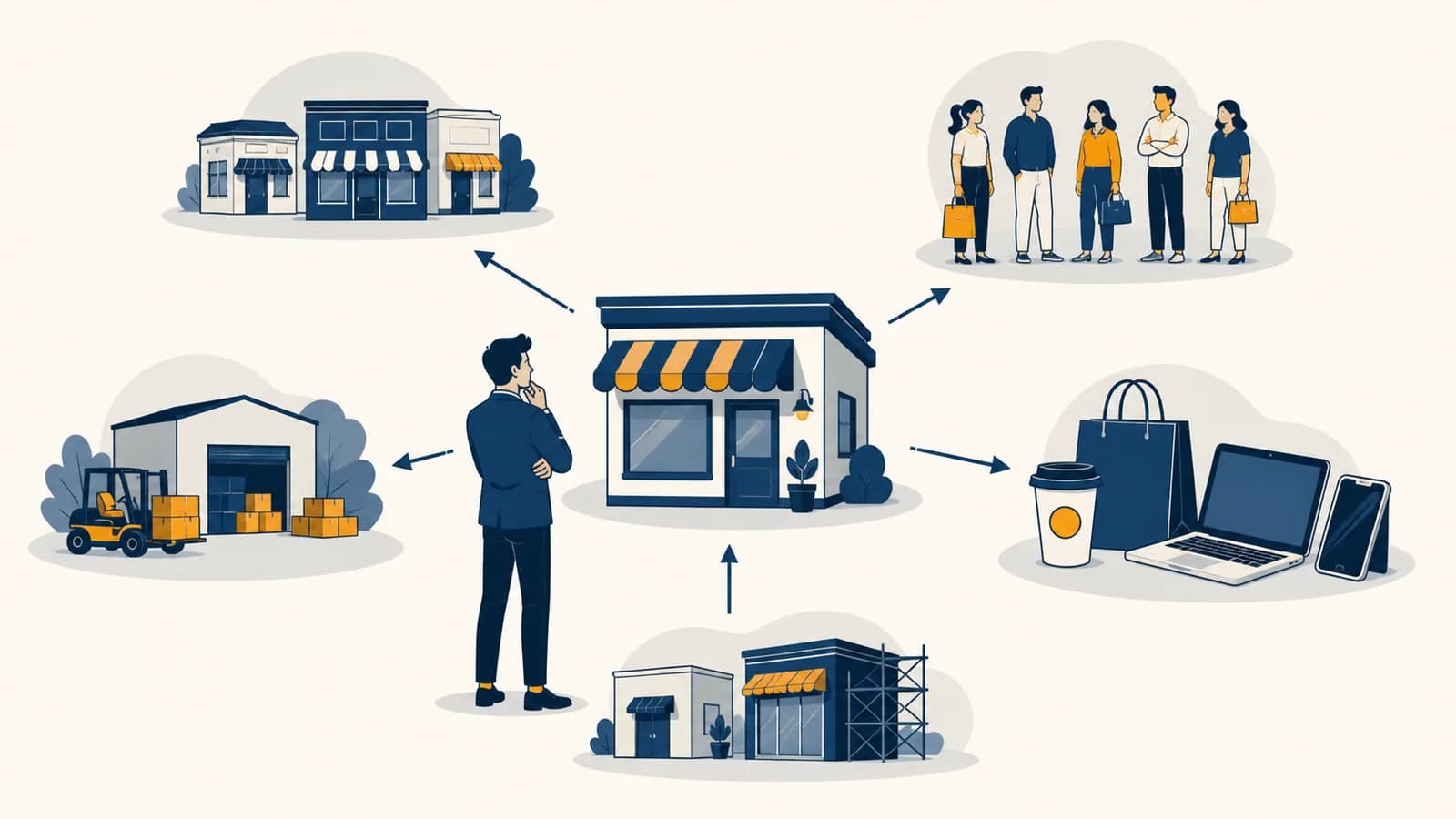
Porter's Five Forces shows how an industry's structure limits or supports profit. By examining rivalry, buyers, suppliers, substitutes, and new entrants, a business owner can identify where value is lost, test a market's appeal, and choose a stronger competitive position.
The framework studies pressure around a business, not the quality of its logo or the enthusiasm of its founder. Michael Porter introduced it in a 1979 Harvard Business Review article. His central insight was that competition comes from more than direct rivals. A profitable bakery can still be squeezed by a flour supplier, a supermarket customer, a home baking kit, or a new bakery opening nearby.
Each force affects one of two basic parts of profit. It can restrict the price a firm can charge, or increase the costs it must bear. Strong buyers demand discounts. Strong suppliers raise input prices. Close substitutes cap prices because customers can leave. New entrants add capacity and chase the same demand. Fierce rivals spend more to win each sale.
This is an industry analysis, so the boundary matters. “Restaurants” is usually too broad because a fast food drive-through and a reservation-only tasting menu solve different customer problems. “Independent lunch restaurants near a city office district” gives a more useful field of view. Geography, customer group, product, and time horizon should all be explicit.
Keep the unit of analysis fixed. If one force describes a local coffee shop and another describes the global drinks industry, the final picture combines markets that do not behave alike.
Five Forces is not a score for whether a company is good or bad. Two firms in the same difficult industry can earn different returns because one has lower costs, loyal customers, exclusive supply, or a more useful product. The model identifies the pressures that strategy must answer.
How can you complete a useful analysis in 15 minutes?
A useful 15 minute analysis needs a narrow market, one sentence of evidence for each force, and a final action. The aim is a fast decision screen, not a polished research report. Uncertainty should be marked instead of hidden behind confident scores.
Write the product, customer, geography, and time horizon in one sentence. Spend two minutes making the boundary specific enough to compare like with like.
Spend two minutes per force. Mark it low, medium, or high, then record the observable fact behind the mark. Five forces take ten minutes.
Use two minutes to name the strongest force and the mechanism by which it removes profit. Do not average the scores.
Use the final minute to state a testable action, such as adding a second supplier, targeting a less price-sensitive customer, or reducing switching friction.
Evidence can be modest and still useful. A page of competitor prices, a supplier quote, customer cancellation notes, planning applications, and product reviews can expose the mechanism. The label matters less than the reason. “Buyer power is high because one customer supplies half our orders and can switch next month” is decision-ready. “Buyer power: 8 out of 10” is not.
Separate facts from assumptions. A known contract end date is a fact. A belief that the customer will renew is an assumption. Marking the difference tells you what to investigate next. It also prevents the analysis from becoming a record of the owner's hopes.
“Supplier power is medium.” The label has no stated cause, no boundary, and no consequence for a decision.
“Supplier power is high because only two approved vendors can meet our specification, so the next contract should include a second source.”
Keep macroeconomic conditions separate from industry structure. Changes in total output, explained through how economists measure GDP, can lift or reduce demand across many industries. Five Forces asks how participants inside one industry divide the value available once that demand exists.
What makes rivalry expensive?
Rivalry is strong when competitors repeatedly cut prices, add costly features, advertise heavily, or expand capacity faster than demand. It becomes especially damaging when products look alike, customers switch easily, fixed costs are high, and struggling firms cannot leave the industry cheaply.
Count competitors, but do not stop there. Three evenly matched firms can fight harder than twenty small firms surrounding a clear leader. Look for the behaviour that transfers value to customers or adds selling cost: frequent promotions, copied features, free delivery, longer credit terms, bidding wars, and unused capacity.
Slow growth often intensifies rivalry because a firm can expand only by taking customers from someone else. High fixed costs add pressure. An airline seat, hotel room, or software server capacity that goes unused still creates cost, so firms may accept a low price to fill it. If many firms reason this way at once, market prices fall.
Three gyms serve a small town. Each has spare equipment and similar memberships. A fourth gym is not needed for rivalry to become severe. If one gym cuts the monthly fee, the others can match it quickly because members can cancel and move with little effort.
Exit barriers also matter. A factory built for one specialised product may have little resale value. Its owner might keep producing while prices barely cover immediate operating costs, hoping conditions improve. Continued output keeps supply high and delays the price recovery that would follow an exit.
If a service sells for £40 and its variable cost is £12, contribution is £28. A price cut to £32 reduces contribution to £20, so the firm needs 40% more sales to recover the same total contribution.
The visible arithmetic explains why a small discount can trigger a large volume target. In the example, the original contribution of £28 divided by the new contribution of £20 equals 1.4. If rivals match the discount, the extra customers may never appear. Rivalry has then reduced the profit pool without increasing the market.
When do buyers and suppliers gain bargaining power?
Buyers gain power when they can switch, delay, combine orders, or produce the product themselves. Suppliers gain power when their input is scarce, differentiated, hard to replace, or easy for them to sell elsewhere. Concentration and credible alternatives determine who can press hardest.
A buyer does not need to argue loudly to be powerful. A procurement team with several qualified vendors can demand quotes and move the order. One large customer also knows that losing its account would hurt the seller. Power rises when the purchase is a large share of the buyer's spending, because there is more reason to negotiate carefully.
Switching cost changes the calculation. Moving payroll software may require data transfer, staff training, testing, and a risky changeover. Even if another provider charges less, these costs can keep the buyer in place. Contracts, compatible file formats, habits, and trusted service can all create switching costs. Some protect customers from disruption; others simply trap them.
Do not confuse a high price with supplier power. A price may be high because the input is genuinely costly to make. Power appears when the supplier can preserve favourable terms because the buyer lacks a credible alternative.
Supplier concentration is only one clue. Ask if the input affects product quality, if substitutes exist, and if changing it requires approval or redesign. A tiny supplier can have strong power when it owns a required patent or provides a certified component. A huge supplier can have limited power when its product is standard and many distributors stock it.
Forward and backward integration make threats more credible. A coffee roaster can weaken a distributor's power by selling directly to cafés. A large café chain can weaken roasters by developing its own roasting operation. Neither move must occur. It influences negotiation if the cost and capability make the threat believable.
What makes entrants and substitutes dangerous?
New entrants are dangerous when they can copy the offer and reach customers without heavy cost or retaliation. Substitutes are dangerous when a different solution meets the same need with a better mix of price, performance, and convenience. These forces attack profit differently.
The threat of entry depends on barriers, not on a list of recent start-ups. Scale economies, regulation, trusted brands, patents, scarce locations, distribution access, data, and customer switching costs can all slow entry. An entrant must also expect a response. Established firms may cut prices, increase marketing, or tie up distribution channels.
Digital markets show why the whole system matters. Publishing software can be cheap, while reliable hosting, payments, security, customer support, and distribution remain difficult. Knowledge of the infrastructure behind internet services helps separate a simple prototype from an operation that can serve paying customers consistently.
Another meal delivery company joins the market and competes with a similar service, cost structure, and customer promise.
A supermarket meal kit lets the customer solve dinner without ordering a prepared restaurant meal at all.
Substitutes are easy to miss because they may sit outside the industry's normal category. Video calls substitute for some business travel. Repair can substitute for replacement. A packed lunch substitutes for a café purchase. The test is the customer job: what other action could produce an acceptable result?
Compare total use cost, not shelf price alone. A cheaper machine that needs more energy and maintenance may be a poor substitute. A more expensive video meeting system may still replace travel after fares, hotels, and staff time are counted. Convenience, risk, status, and learning effort also enter the decision.
A cinema owner sees another cinema as a rival. A streaming service is a substitute because it provides entertainment differently. A new shopping centre cinema is a possible entrant before it opens, then becomes a rival after it begins selling tickets in the same market.
What does a complete Five Forces example look like?
Consider an independent coffee shop serving commuters near one railway station. A first pass suggests high rivalry, medium buyer power, medium supplier power, medium entry threat, and high substitution threat. The evidence and resulting actions matter more than those labels alone.
| Force | Observed mechanism | Possible response |
|---|---|---|
| Rivalry: high | Several nearby shops sell similar drinks during the same morning rush. | Compete on order speed and dependable quality instead of copying every discount. |
| Buyer power: medium | Each customer is small, but switching requires only a short walk. | Use pre-ordering and a simple loyalty benefit to raise convenience. |
| Supplier power: medium | Many general wholesalers exist, while the chosen speciality beans are less replaceable. | Qualify a second roaster before a contract negotiation. |
| Entry threat: medium | Equipment can be bought, but the best station locations are scarce. | Secure a longer lease only after testing commuter demand. |
| Substitutes: high | Customers can make coffee at home, use office machines, or choose energy drinks. | Sell reliable speed and an experience that home preparation cannot match. |
This table does not prove that the shop will succeed. It makes assumptions visible. A footfall count can test demand. Timed observations can compare queues. Supplier quotes can test replaceability. Short customer interviews can reveal if speed, taste, price, or routine drives the purchase.
The forces also interact. Scarce station property raises an entry barrier, but it may give the landlord supplier-like power over rent. Easy buyer switching intensifies rivalry because a discount can move demand quickly. A substitute such as home coffee becomes more attractive after a price rise. Avoid counting one fact twice without explaining both mechanisms.
Now the owner has decisions rather than a poster. The shop can test a fast pre-order lane, request quotes from another roaster, and count how many commuters already carry drinks from home. If those tests contradict the first pass, the analysis should change. Revision is a sign that evidence is working.
How should evidence change the final judgment?
Evidence should replace broad impressions with a causal statement: because this condition exists, this participant can affect price, cost, or demand. Rate confidence separately from force strength, then gather information where a high-pressure judgment depends on weak evidence or an irreversible decision.
Useful sources sit close to actual behaviour. Customer invoices show concentration. Churn notes show why buyers leave. Supplier contracts reveal notice periods and price clauses. Competitor job adverts may show planned capacity. Product reviews reveal substitute complaints. Regulatory registers can show licence requirements and possible entrants.
Public data provides context, but use it at the right scale. National household spending may say little about one station at 7:30 in the morning. A week of local observations can sometimes answer the immediate decision better. Broader ideas about markets, incentives, and scarcity sit within the economics subject hub, where the foundations behind these pressures can be studied directly.
If one account buys £30,000 from annual sales of £120,000, its share is 25%. Losing it would remove one quarter of sales before any replacement business.
The calculation does not establish buyer power by itself. The customer may have nowhere else to buy, or a long contract may limit switching. It does show exposure and tells the owner which contract, alternatives, and renewal date deserve attention.
Revisit the analysis after a meaningful structural change: a new regulation, a major supplier merger, a distribution platform changing its terms, or a substitute improving enough to alter customer behaviour. A weekly rewrite usually creates noise. A yearly ritual can miss a sudden threat. Let changed mechanisms set the timing.
Five Forces turns market pressure into a decision
Porter's Five Forces earns its place when it connects an external pressure to a practical response. Define the market narrowly, explain each force with evidence, identify the strongest constraint on profit, and select an action that changes exposure or tests the most important uncertainty.
A company cannot remove every force. It can choose where to compete, which customers to serve, which capabilities to build, and which dependencies to reduce. A shop might secure a scarce site. A manufacturer might certify a second supplier. A software firm might make onboarding easier while giving customers reliable data export.
The strongest action is specific enough to test. “Differentiate more” is vague. “Offer guaranteed ten minute pickup to office customers for four weeks, then compare repeat orders and contribution per sale” has a customer, a promise, a time period, and a measure. The result can support, reject, or refine the idea.
The takeaway: Use the five forces as five questions about who can take value from the business and how. Record the mechanism, check the evidence, then make one choice that improves the firm's position or reduces uncertainty.
A 15 minute version is enough for a first screen, a meeting, or an early business idea. Larger investments deserve deeper research, sensitivity checks, and direct evidence from customers and suppliers. The framework remains the same. Its quality rises with a precise market boundary and honest reasons behind every judgment.